
A SLOW DAY IN THE ESTONIAN OLD TOWN – UNESCO WORLD HERITAGE SITE
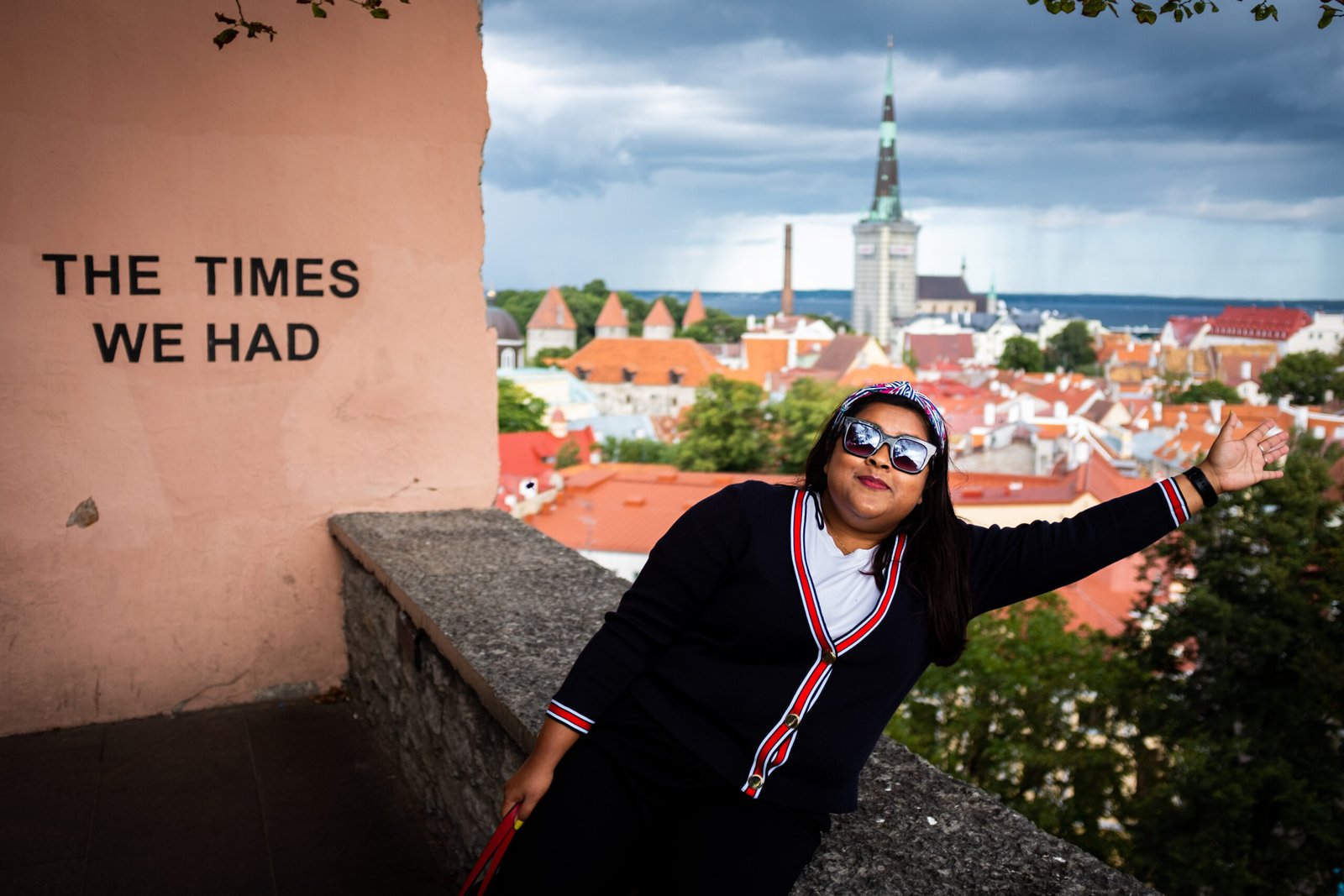
There’s a particular kind of quiet that only medieval towns hold. You find it in a morning stroll in Tallinn, when the cobblestones are still damp from the night, and the distant church bell reminds you that time here moves differently than it does back home.
We had no strict itinerary the morning we were in Tallinn’s old town…. Just a coffee in hand and a happy intention to be in the present. That’s the best way to do a holiday for us!
The name Tallinn is thought to be derived from Taani-linn, Estonian for “Danish castle”, a quiet nod to the Danish conquest of 1219, when King Valdemar II arrived and built his fortress on Toompea Hill. However, the locals had been living here for nearly 5,000 years before that.
Slow Mornings in Raekoja Plats
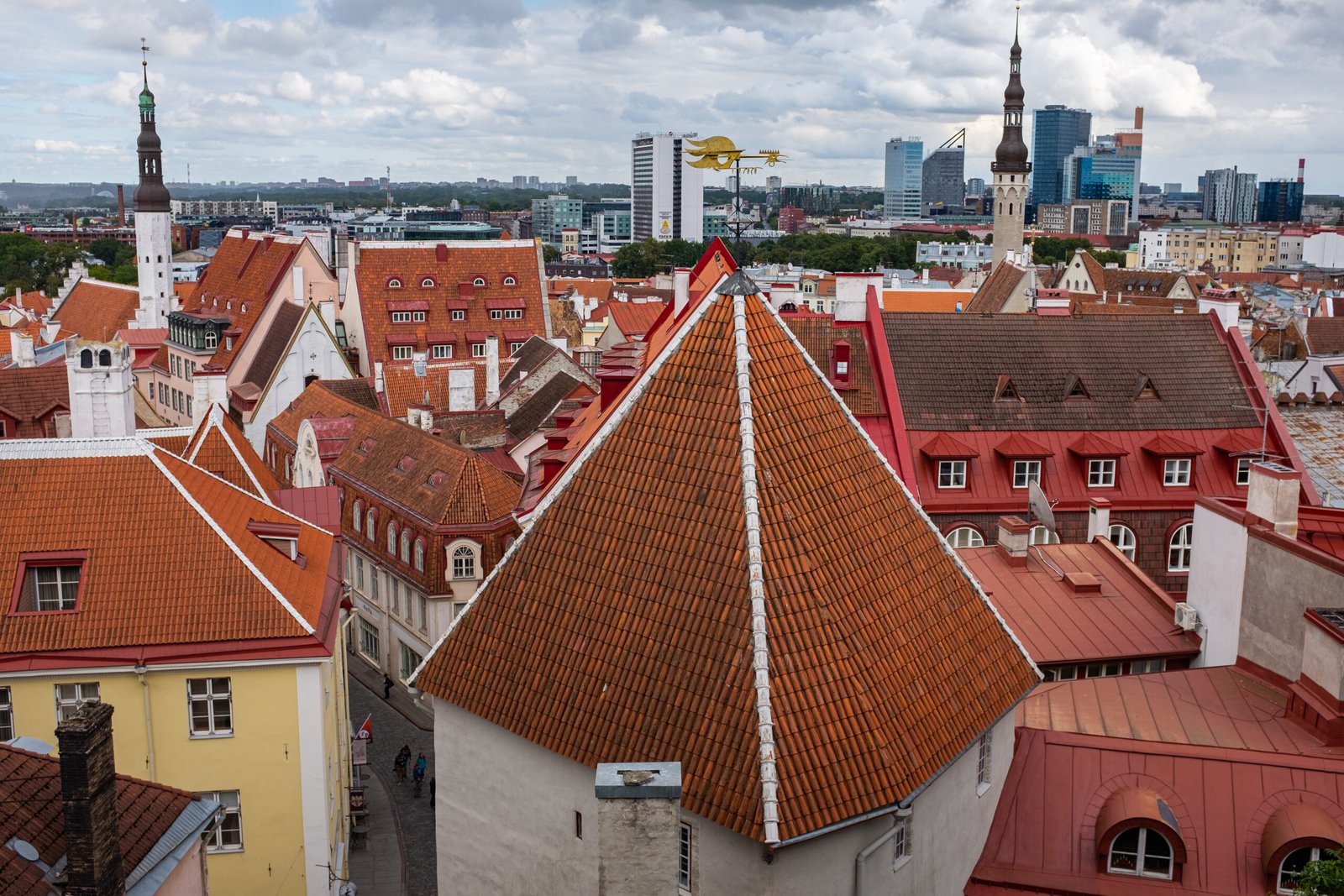
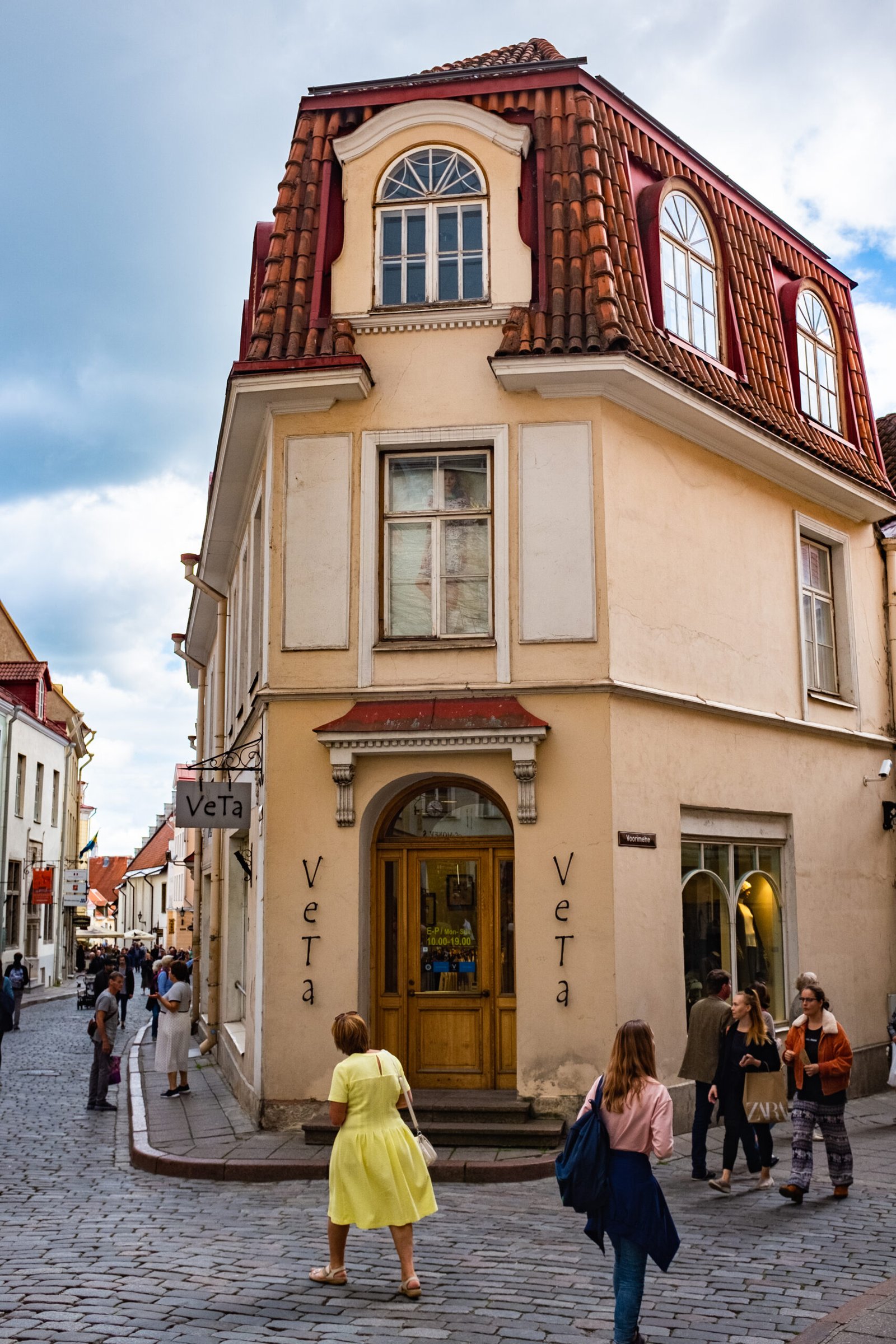
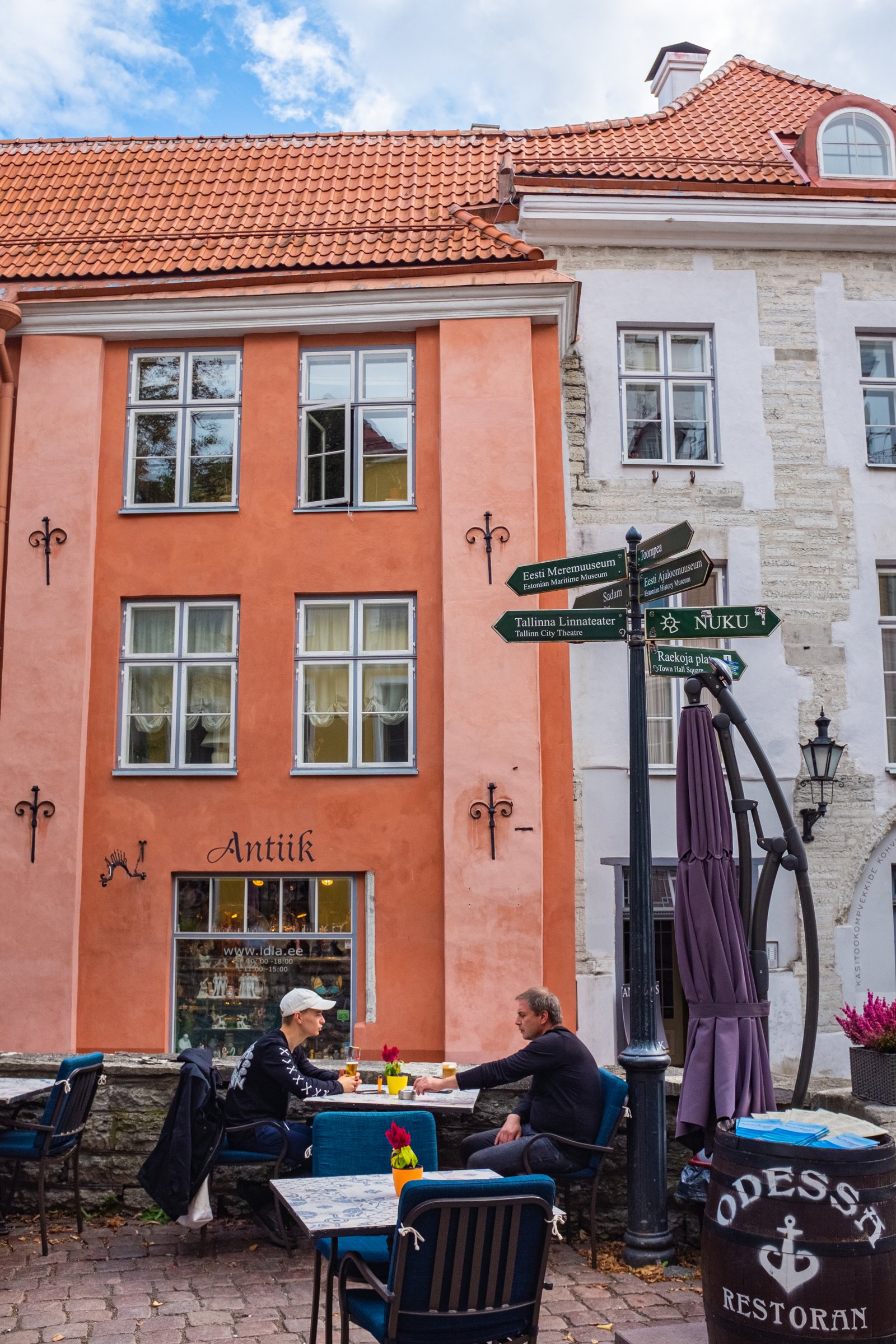
The Town Hall Square is the beating heart of the Old Town! It is small enough that you can’t truly lose your way, but it’s layered enough that you keep finding things you didn’t expect. A crooked alley that dead-ends into a flower seller. A courtyard tucked behind a wooden gate adorned with lights. Cute boutique shops selling handmade earrings, wooden artifacts, and alpaca wool scarves and socks!
We sat on the steps of the old town hall for a long time. Ate a warm pastry from the bakery that smelled like cardamom and warm cocoa. The walls here date back to the 13th century. I run my fingers along them and try to do the math, all the winters they’ve absorbed, all the footsteps they’ve counted.
One of the towers along the town walls is called Kiek in de Kök – German for “Peek in the Kitchen”, because from its 38-metre height, you could once see straight into the surrounding homes’ kitchens. Less romantically, nine cannonballs from a 1577 siege are still embedded in its outer walls. Nobody ever removed them.
The View from Toompea Hill
The upper town or Toompea sits on a limestone plateau above the lower town, and the climb is worth every step.
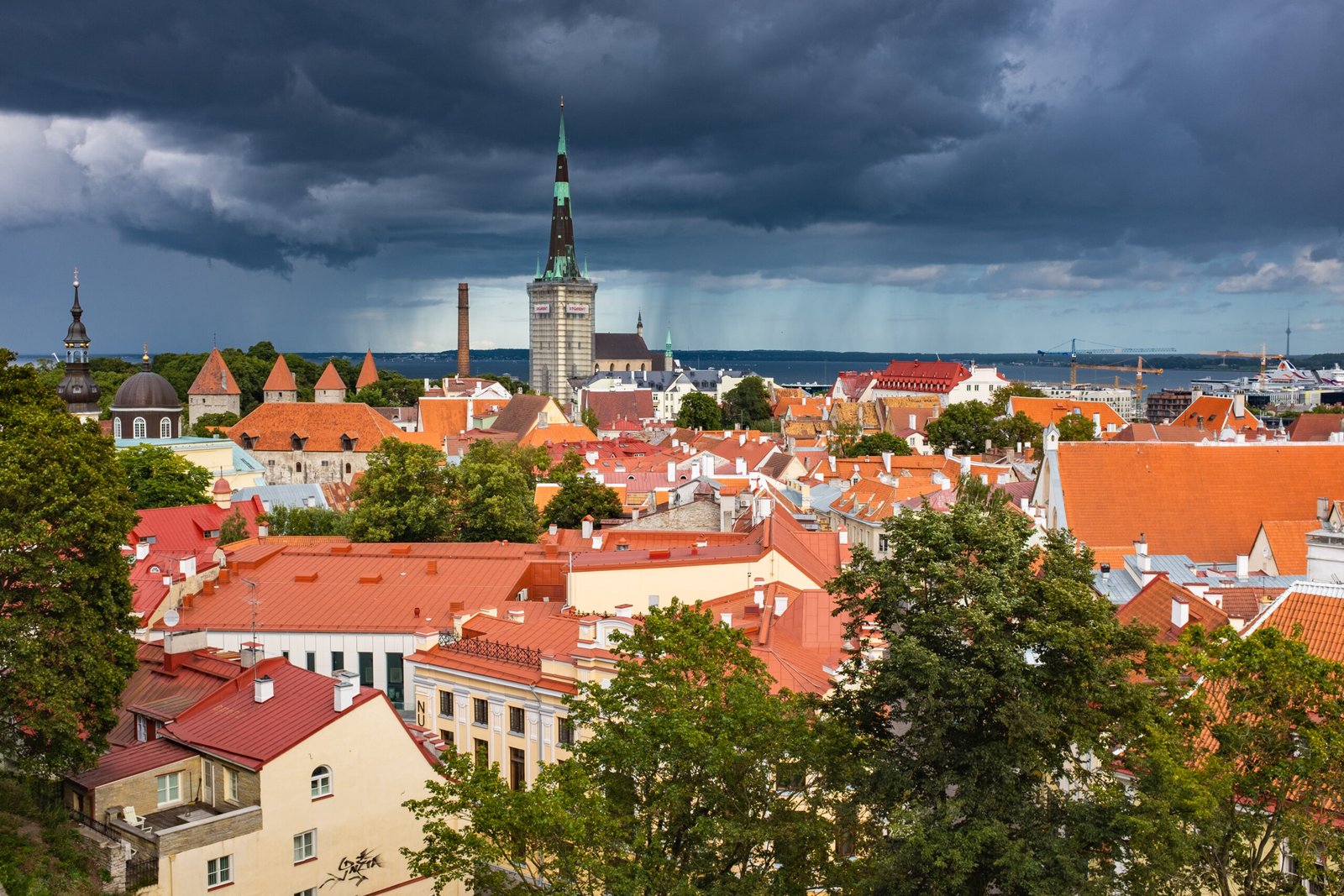
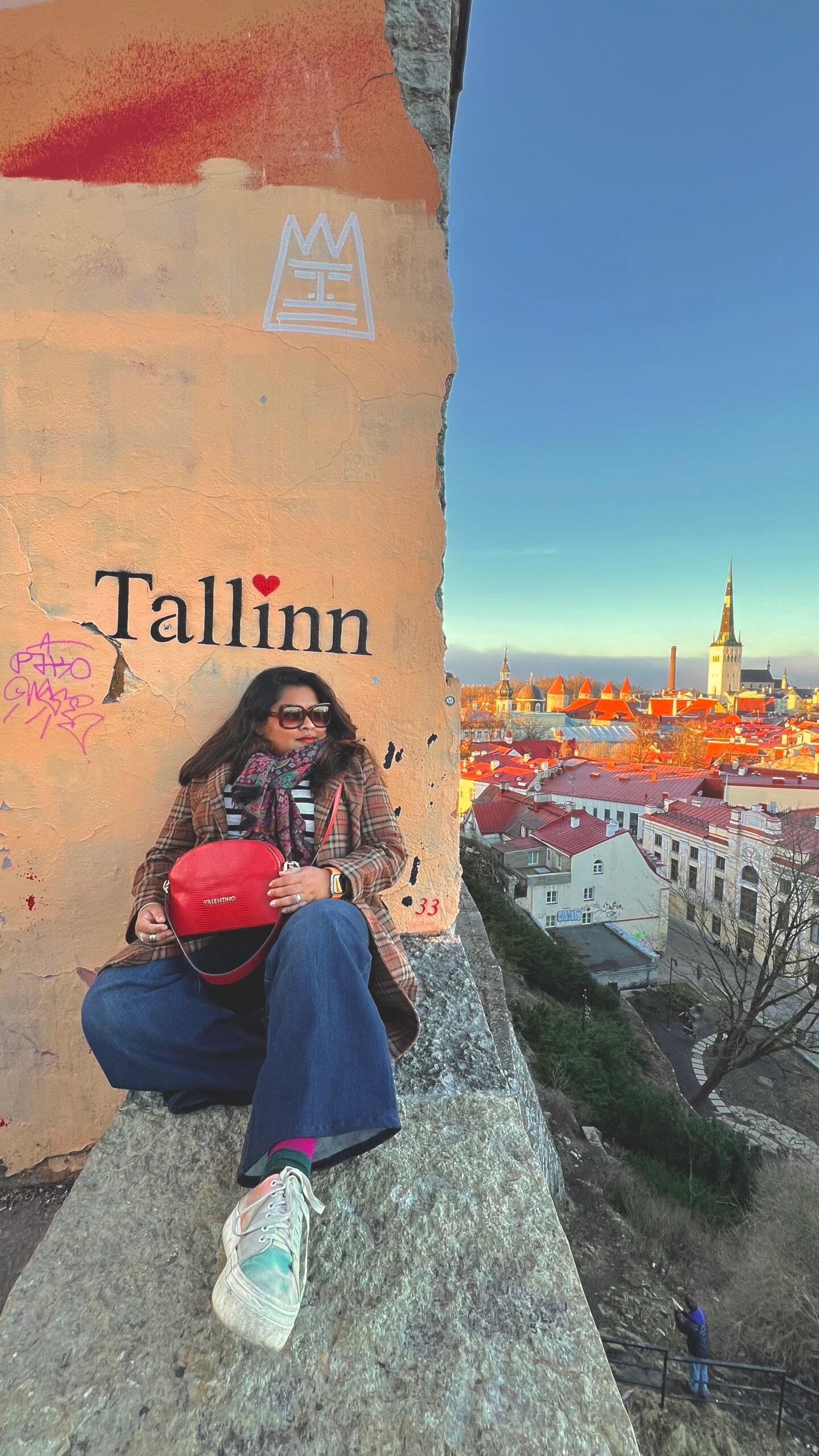
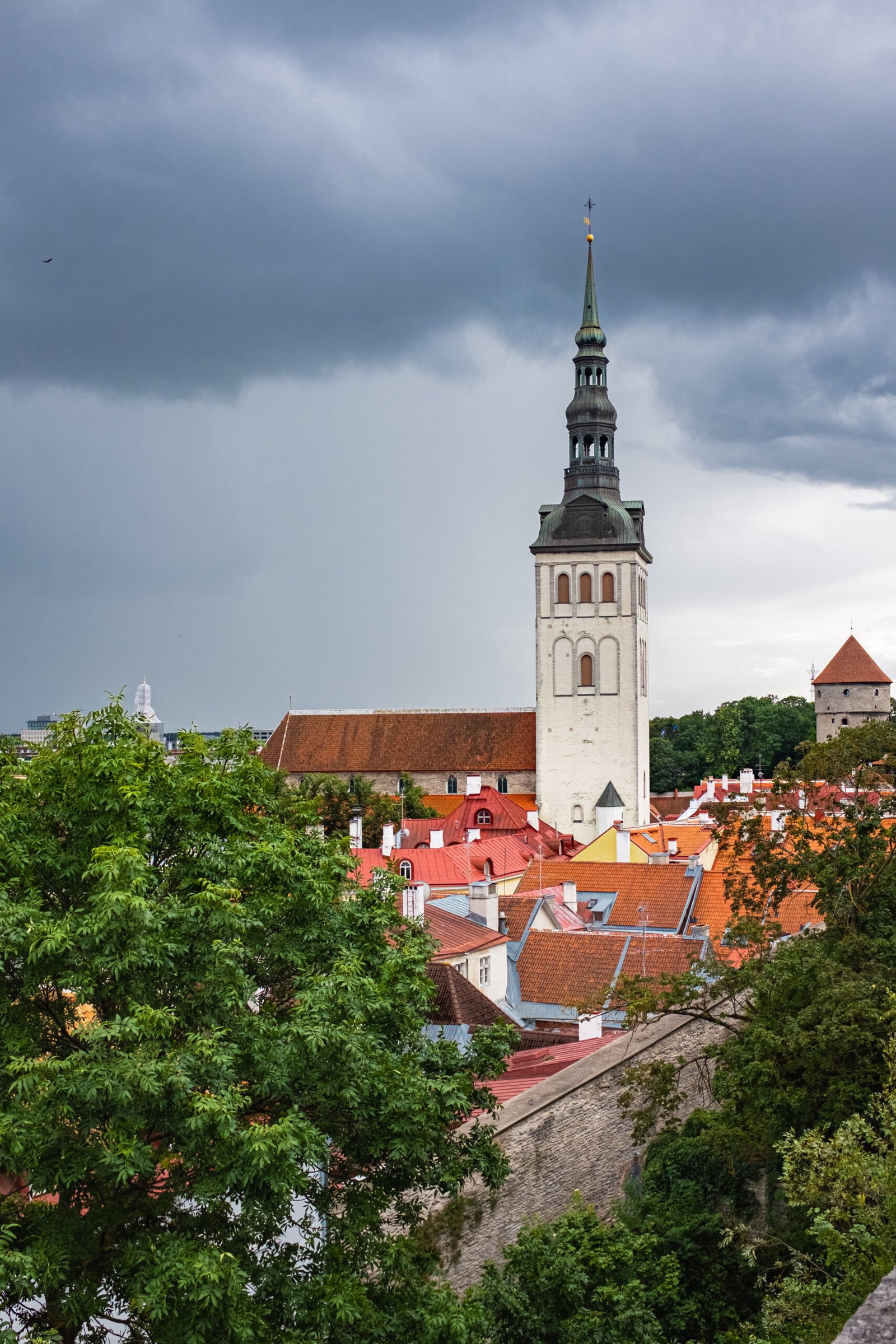
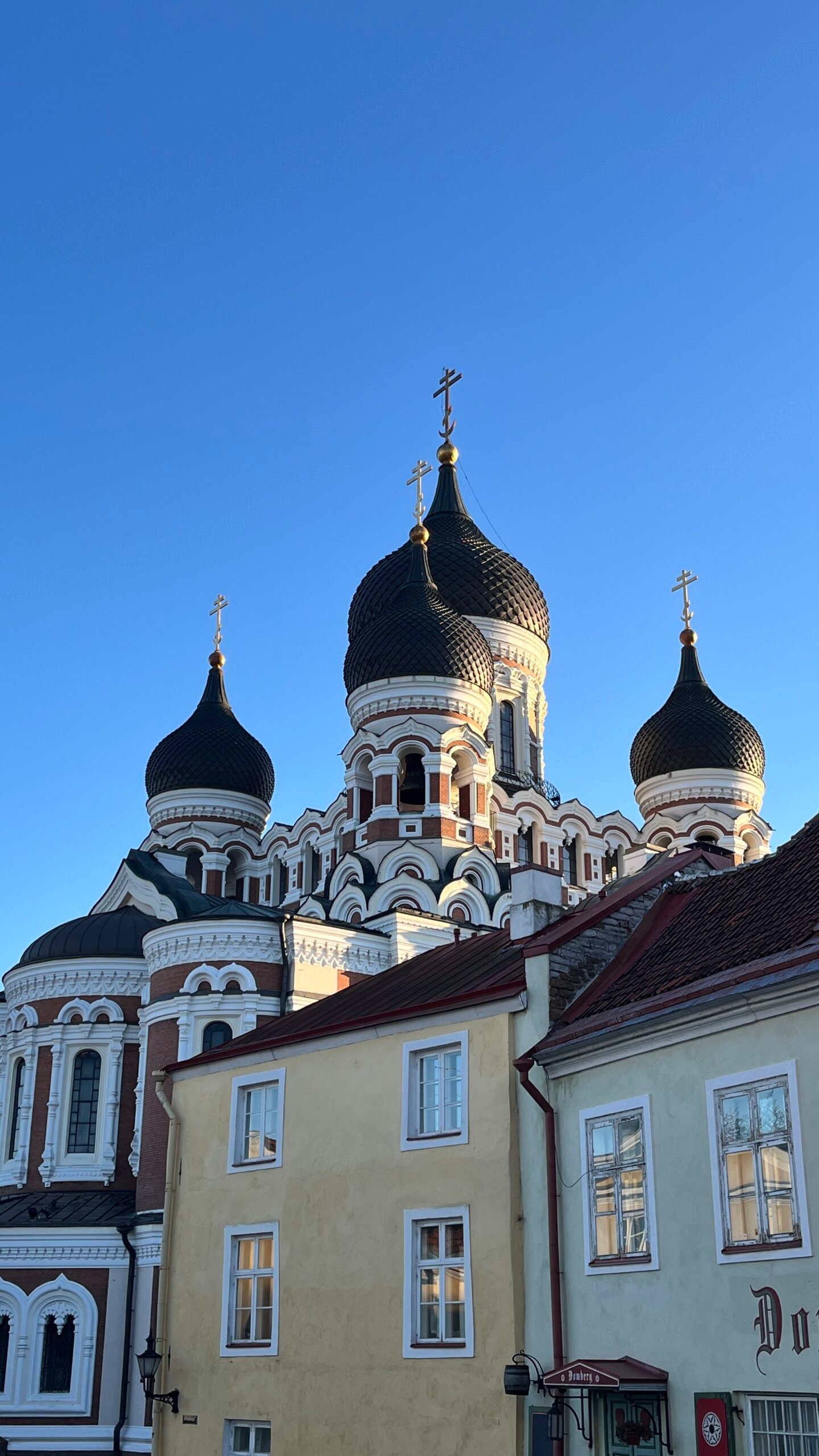
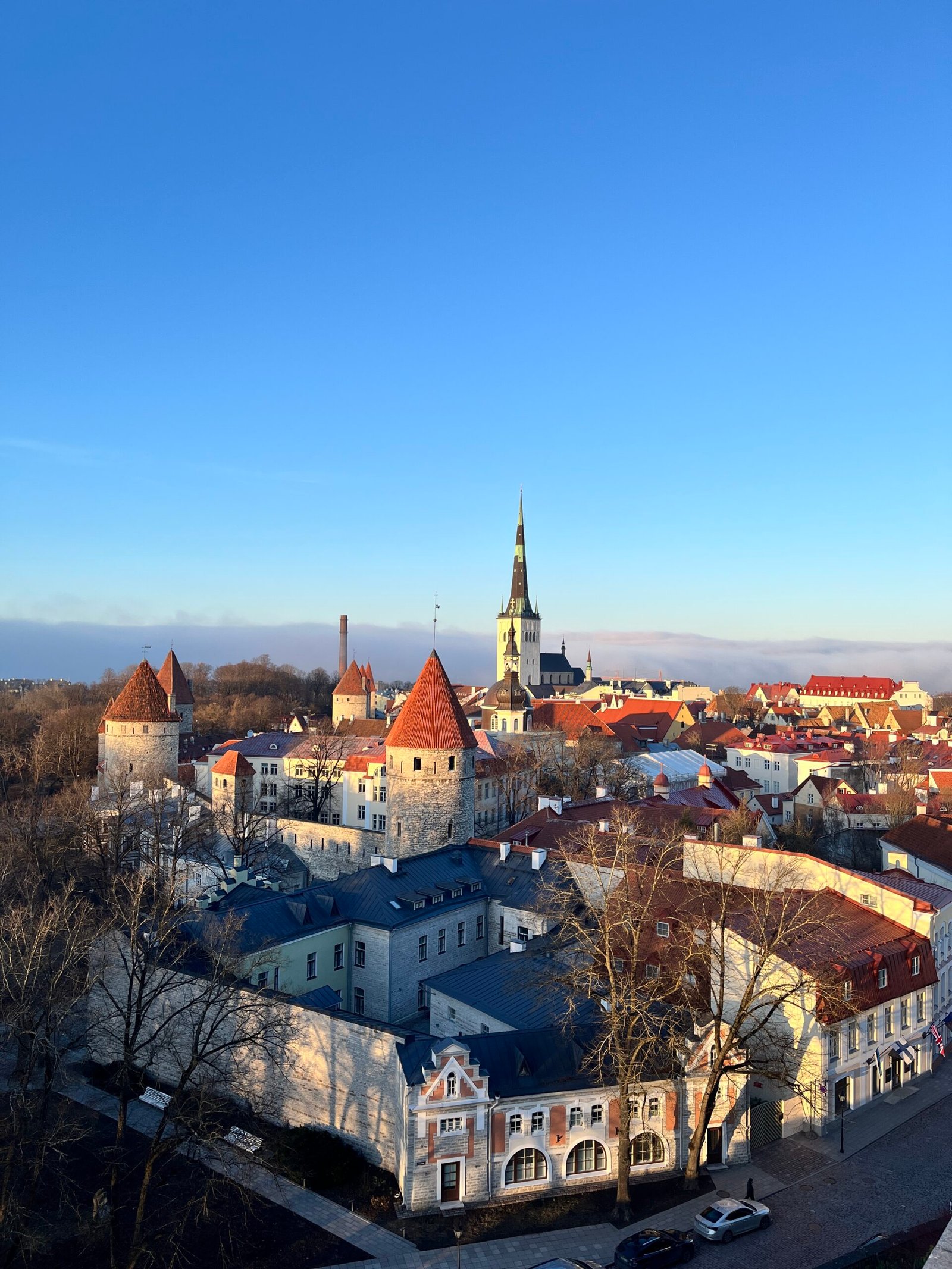
From the Patkuli viewing platform on the north face of the hill, the rust-coloured rooftops of the Old Town spread out below, a page out of a romantic novel. The medieval town wall curves through the frame, its towers still standing. Beyond it, on a clear day shines the Baltic Sea. And just as you turn the other side, there is the Alexander Nevsky Cathedral. Five gilded onion domes rising directly opposite Toompea Castle, impossible to miss, almost confrontational in their presence.
The cathedral was built between 1894 and 1900, when Estonia was under Russian Imperial rule, deliberately placed facing the castle as a statement of dominance. It is dedicated to the 13th-century Russian military saint Alexander Nevsky, who fought a famous battle near Estonian territory in 1242. The Estonians disliked it so much that after independence in 1918, they voted to demolish it. They never did, partly from lack of funds, partly from the building’s sheer immovability. Today it stands as the largest Orthodox cathedral in Tallinn, its 15-ton bell the loudest in the city. Complicated history. Undeniable beauty.
A City That Eats Well
Estonian food carries the fingerprints of everyone who has passed through – Nordic simplicity, Russian heartiness, German precision, Baltic smoke and salt. Dark rye bread arrives at almost every table, dense and malty, served with salted butter that you will think about for weeks. Wild game features widely: elk, boar, venison, prepared with forest herbs and seasonal berries. The sea is close, and the smoked fish shows it.
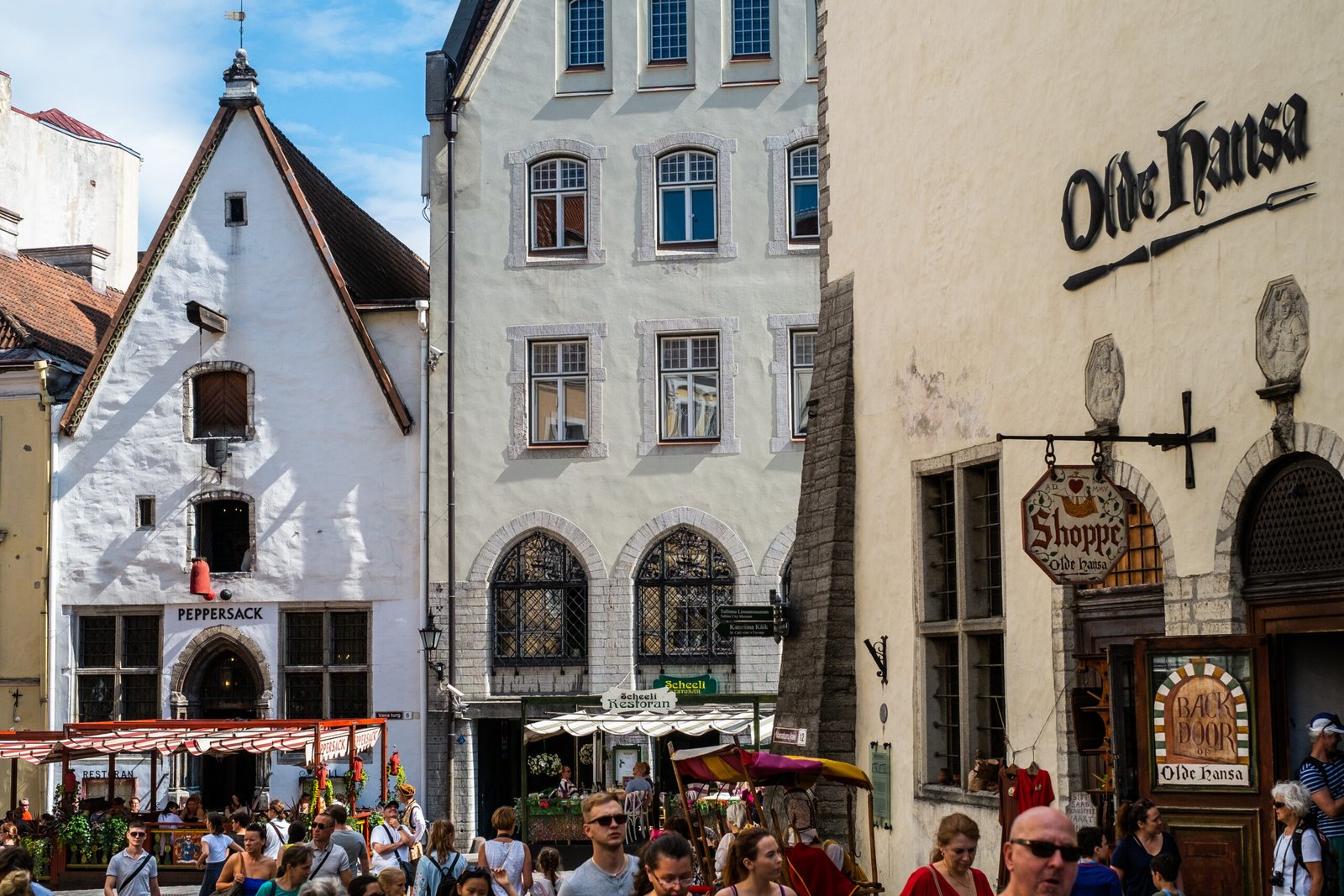
Then there is Olde Hansa, where there is this entire ‘experience’ of food…
Located in a merchant’s house built around 1475, it has been recreating 15th-century Hanseatic dining since 1998. The staff arrive in period costume. There is no electric lighting, just candles everywhere, throwing amber warmth across stone walls and heavy wooden tables. Troubadours move between the floors playing hurdy-gurdy and fiddle, performing works from composers who were actually alive in the 1400s.
Every dish, from their world famous elk stew to Crusaders spicy lentils with saffron spelt is cooked from recipes sourced from medieval town hall records using cinnamon, cardamom, saffron, black pepper – spices that would have arrived in Tallinn harbour by Hanseatic trade ship from the Far East.
But the city has also grown into something more contemporary. A new generation of Estonian chefs is earning international recognition. Tallinn now holds Michelin stars, with chefs blending local forest and sea produce with modern finesse. Beyond the fine dining, the neighbourhood of Kalamaja and the Telliskivi Creative City have cultivated a lively scene of natural wine bars, specialty coffee roasters, and casual bistros that feel genuinely local rather than designed for visitors.
Tallinn doesn’t demand anything from you. It embraces you into its ancient, unhurried pace and quietly invites you to slow down, take a deep breath and just live in the moment for a while. The best way to explore Tallinn is on a day cruise from Helsinki.